
About Yehuda Salu
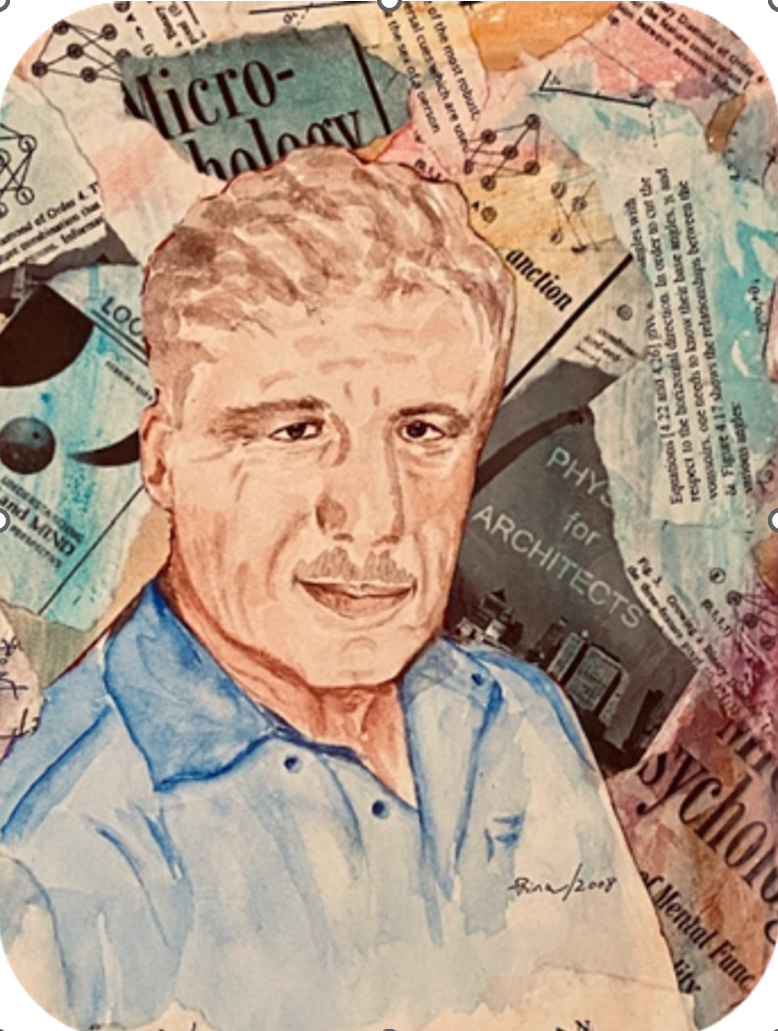
Yehuda Salu, Ph.D., is a physicist, researcher, author, and retired professor of physics at Howard University in Washington, DC.
He received his M.Sc. in Physics from the Hebrew University of Jerusalem and his Ph.D. in Physics from Tel Aviv University. Throughout his scientific career, he has used mathematical models and computer simulations to investigate physical and biological phenomena.
His research has ranged from the electrical activity of the heart and brain to artificial intelligence and neural networks. Beginning in the early 1980s, he explored how networks of neurons could perform basic mental functions such as learning, remembering, forming concepts, and reasoning.
These investigations led to his book Understanding Brain and Mind: A Connectionist Perspective (2001) and subsequently to the development of micropsychology, an approach that seeks to bridge psychology and biology by identifying and studying the functional components of behavior.
His current research explores how innate behavioral systems develop through experience, how they interact to produce complex behavior, and how their functions relate to underlying biological mechanisms.
Two recent publications reflect these interests: his scientific paper on human sex recognition, published in Frontiers in Behavioral Neuroscience in 2026, and his book From Instincts to Love: Micropsychology of Human Nature (2026).
He continues to explore how theoretical models, experimental findings, and advances in artificial intelligence can contribute to our understanding of human nature.
Academic information
Academic background
- Ph.D. in Physics, Tel Aviv University, 1973.
- M.Sc. in Physics, Hebrew University of Jerusalem, 1964.
- University of Iowa, 1973–1980: research in plasma physics and biomedical physics.
- Howard University, 1981–2017: Professor of Physics from 1987.
Research experience
Computational physics; noninvasive localization of electrical sources in the heart and brain; neural network models of learning, concepts and reasoning; classification and remote sensing. Research support included NIH, NASA and NSF, and a National Research Council fellowship at NASA Goddard Space Flight Center.
Selected scientific publications
- 2026 — Human sex recognition: a developmental voice-based model of brain circuits. Frontiers in Behavioral Neuroscience, 20, 1714154.
- 2011 — The roots of sexual arousal and sexual orientation. Medical Hypotheses, 76, 384–387.
- 1994 — A neural network for analogical reasoning. Proceedings of the IEEE International Conference on Neural Networks, VII, 4772–4777.
- 1990 — Salu et al. An improved method for localizing electric brain dipoles. IEEE Transactions on Biomedical Engineering, 37, 699–705.
- 1988 — Models of neural novelty detectors, with similarity to cerebral cortex. BioSystems, 21, 99–113.
- 1985 — Learning and coding of concepts in neural networks. BioSystems, 18, 93–103.
- 1983 — Computer simulations of learning in neural systems. Computers and Biomedical Research, 16, 176–187.
Books
- From Instincts to Love: Micropsychology of Human Nature (2026).
- Micropsychology (2008).
- Physics for Architects (2004; second edition 2009).
- Understanding Brain and Mind: A Connectionist Perspective (2001).